A round-up of recent work: Let’s Buy Afghan Dope, a nearly baked proposal that proved popular with readers at the International Herald Tribune, and was later echoed by Vartan Gregorian, president of the Carnegie Corporation; A Hunger Artist, on the cynicism of India’s belt-waving “Gandhian” savior, Anna Hazare; two pieces on the hunger strikes of the scientist-turned-swami GD Agrawal; a brief update on the Kony 2012 campaign; in India, skin-whitening reaches below the belt; in Egypt, the undead lunged for the presidency (only to later be disqualified).
More soon.
This piece first appeared at National Geographic, and was updated Saturday night.
G.D. Agrawal is determined to die.
“At the moment I am quite resigned to my fate,” Agrawal, the 80-year-old dean of India’s environmental engineers, tells me by phone from his hospital bed in the holy city of Varanasi.
Agrawal hasn’t eaten since February 8. He hasn’t taken a drink of water since March 8; an intravenous drip of dextrose and vitamins keeps him lucid.

GD Agrawal, the environmental engineer also known as Swami Gyan Swaroop Sanand, at the Varanasi hospital where he is on a hunger strike. Agrawal says he will remove his IV tube on Saturday. "At the moment I am quite resigned to my fate," he told Nat Geo News Watch.
Continue reading »

Evelyn Amony was kidnapped by the Lord's Resistance Army at age12 and was first raped by its leader, Joseph Kony, at 15. One of dozens of girls selected to be Kony's concubines, she had three children including Mercy, 14 months, before escaping to freedom in January 2005. Photographed March 31, 2006, in Gulu, Uganda, by Dan Morrison.
The release this week of the video Kony 2012 and a viral social media campaign by the American NGO Invisible Children has jacked awareness of the vicious Ugandan rebel group the Lord’s Resistance Army into the stratosphere. It’s also provoked a significant backlash from experts who say the film is simplistic, manipulative, and that it narcissistically focuses on the filmmakers themselves over their African subjects. Invisible Children has responded to some of that criticism, and debate over the film and its prescriptions continues across the web, much of it under the Twitter hashtags #Kony2012 and #StopKony.
In this post, which first appeared at National Geographic, my friend Anywar Ricky Richard, a former child soldier of the Lord’s Resistance Army, and director of the northern Ugandan organization Friends of Orphans, responds to the clamor: Continue reading »
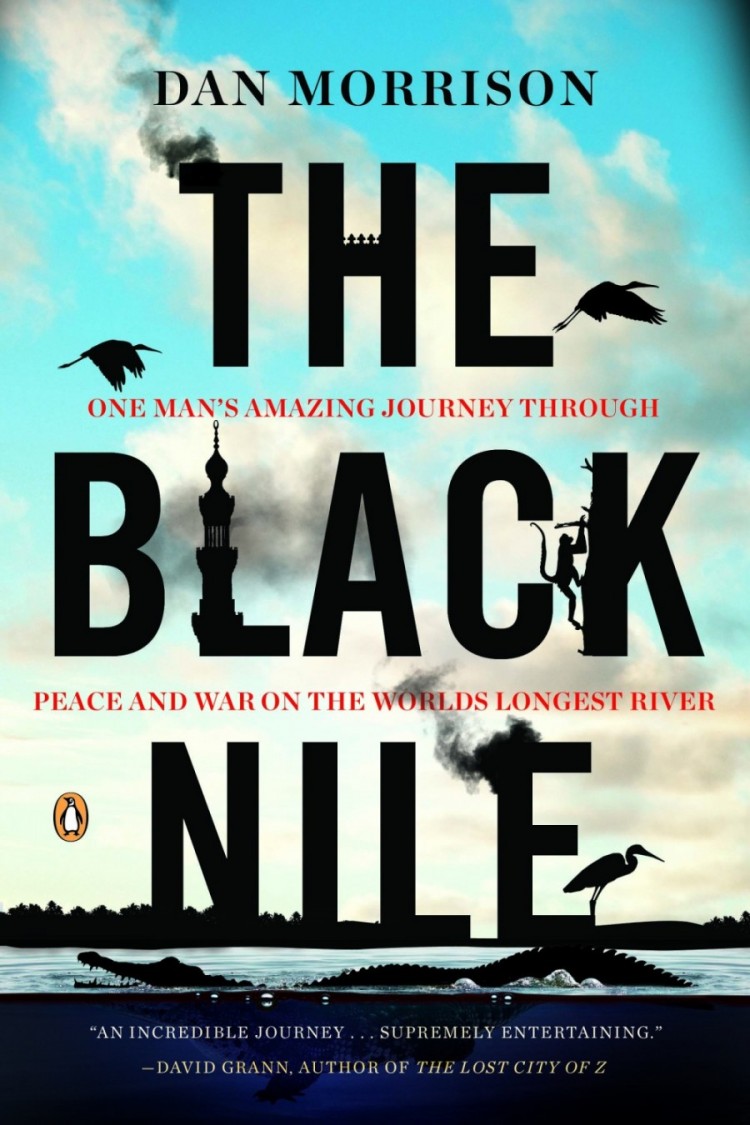
From a “nomad who pursues every form of transportation imaginable to follow Africa’s longest river,” The Black Nile is “an evocative piece of reporting…a portrait of a fractured country just one spark away from a renewal of hostilities.” –Joshua Hammer, The New York Times Sunday Book Review
Beautifully written. A masterful narrative of investigative reportage, travel writing, and contemporary history. . . . The Black Nile is all at once thrilling, sad, and—most of all—thoughtful. —The Daily Beast
Dan Morrison takes the reader on an incredible journey in The Black Nile. Weaving together intense travel writing and history, he has produced a supremely entertaining work, and also an important one. –David Grann, author of The Lost City of Z
Part On the Road, part Fear and Loathing in Africa, Dan Morrison takes us with him on his journey down the Nile–teaching us, by example, to be explorers of both the world and ourselves. –Kevin Sites, author of In the Hot Zone: One Man, One Year, Twenty Wars
When Franklin Roosevelt appointed the business titan and former bootlegger Joseph Kennedy to head his new Securities and Exchange Commission in 1934, the U.S. president famously bragged that he had “set a thief to catch a thief.” If India’s politicians follow this strategy, its most populous state will be crime-free in no time.
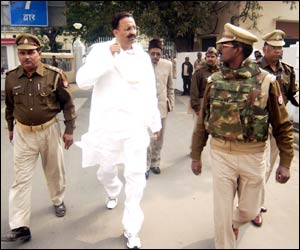
At least ten state assembly candidates in Uttar Pradesh are presently in jail awaiting trial on charges that include murder and racketeering. In the current assembly, 139 out of 404 legislators are free while facing criminal charges.
My latest, “In Indian Politics, Crime Pays,” is up at the New York Times/International Herald Tribune.
Two recent pieces for the New York Times/International Herald Tribune‘s Latitude blog:
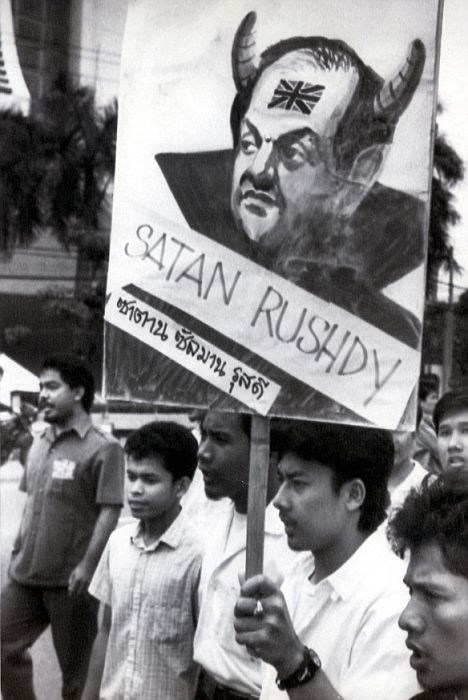
India’s Political Blasphemy, on the Salman Rushdie affair earlier this month at the Jaipur Literary Festival.
Come Hell With High Water, on Bangladesh’s approach to global climate change.
Next up: India’s gangster parliamentarians.

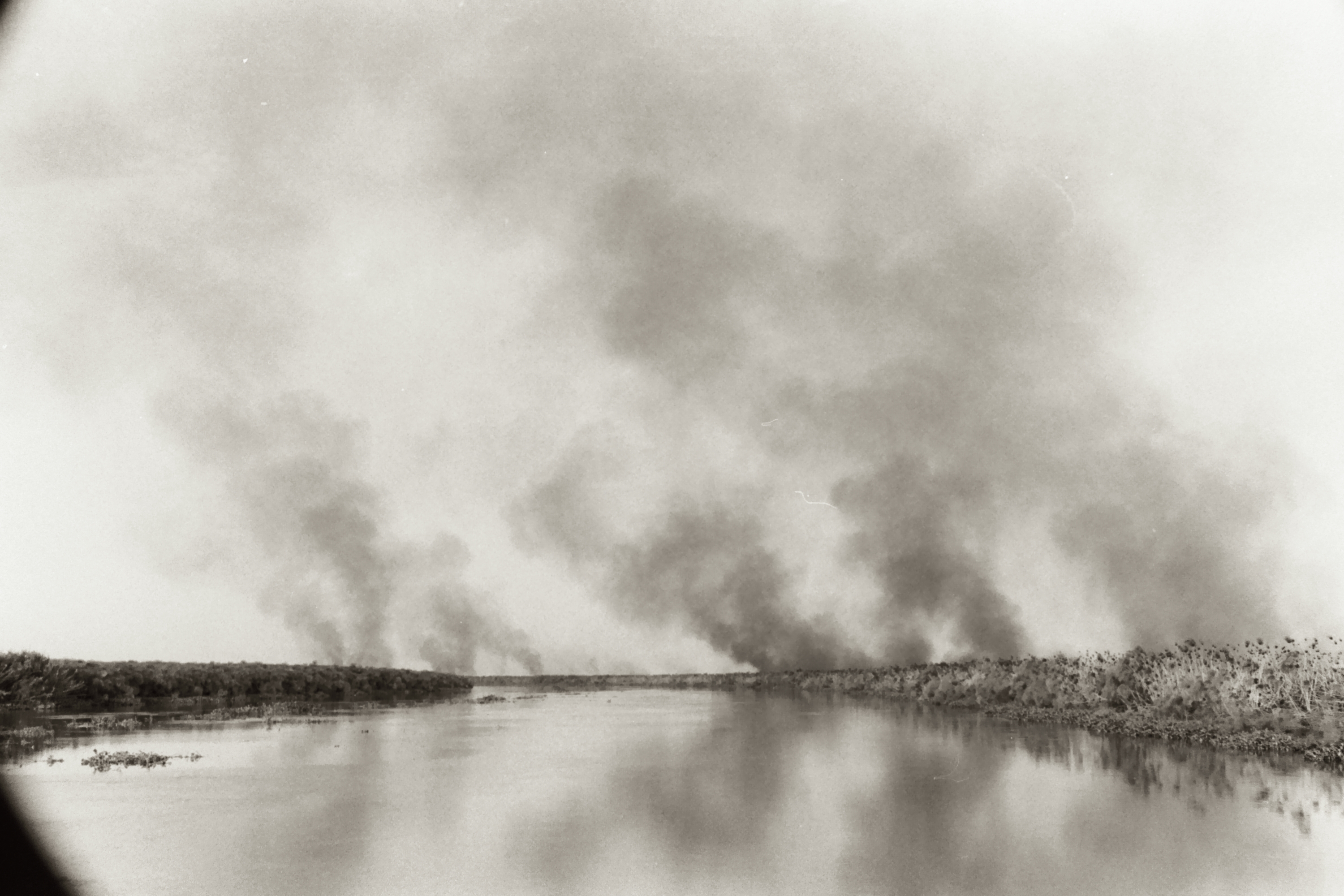
Burning marshland, South Sudan, 2007. Photo by Dan Morrison.
This piece first appeared at National Geographic.
An obscure indie-rock b-side kept running through my head last January as I hopped from city to city reporting on South Sudan’s freedom referendum.
The song was Two States, by the band Pavement. The words were simple, the music jaunty and driven.
Two states. We want two states.
North and south. Two states.
Forty million barrels!
The lyrics seemed shockingly, if accidentally, appropriate to the break-up of Africa’s biggest country, and the high-stakes competition for the valuable oil located on Sudan’s contested north-south border. I grinned as the song persisted during my travels in Khartoum, Malakal, and Juba. After decades of civil war and life as second-class citizens, more than 98 percent of southern voters chose to leave Sudan and become masters of their own destinies.
But the chorus I recalled was wrong, misheard many years ago and never corrected.
The accurate chorus, tragically, is perhaps more fitting to the independent Republic of South Sudan than those I had imagined. It goes:
Forty million daggers!
South Sudan is at war with itself. Continue reading »
This post first appeared at National Geographic, and references “Feral Cats and Social Indicators”, my latest piece at The New York Times’ Latitude blog
The photo you see above is of an adorable stray cat that’s living like a squatter at Bangladesh’s biggest children’s hospital.
The kitty could be called adorable, if a little standoffish. It’s also something of a scourge: Cats shouldn’t be allowed to roam the open halls and wards of a hospital, certainly not one treating vulnerable newborns.
My most recent piece for the New York Times’ Latitude blog looks at a terrible attack that one such stray made on a six-day-old infant, and how such incidents deflect attention from the strong gains Bangladesh is making in terms of health and development. Continue reading »
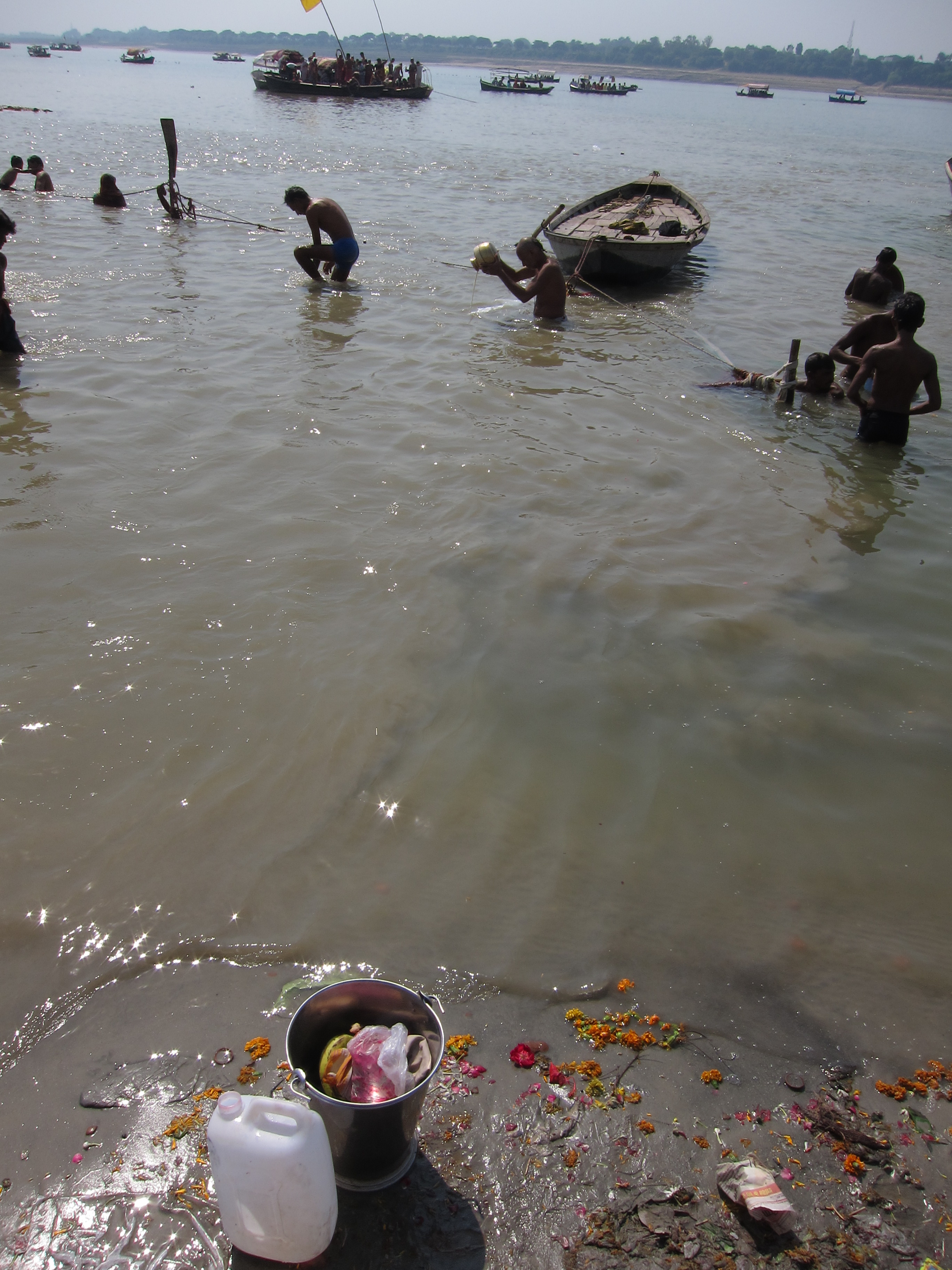
A version of this post first appeared at National Geographic, and references my piece, Grunge on the Ganges, at The New York Times’ Latitude blog.
Varanasi, India — A couple years ago, one of India’s leading industrial houses announced a revolutionary new household filter that would for the first time bring affordable, safe drinking water to millions of homes. The Tata Swach combines the inexpensive carbon of burnt rice husks with silver nano-particles to kill and remove deadly microbes including cholera, E coli, and the rotavirus.
The Swach doesn’t need electricity or running water. Unlike some filters sold in the United States, the Swatch’s filter bulb cuts off the flow of water when it’s exhausted, meaning it’s impossible to drink unclean water that’s passed through a spent filter. (There’s no risk in drinking unfiltered water in New York or Denver, but it’s a different story in India, where waterborne diseases kill as many as half a million children each year.)
And it’s hugely affordable: The unit costs less than $20 and monthly filter replacements are just $7.
More than a million of these filters have been sold since 2009, and it’s not hard to imagine the public health benefits that will follow. More Indian companies are jumping into the low-cost filter business, which could push prices even lower.
This Indian success story, however, can also be seen as a thin bit of cover for the country’s scandalously poor public services. Continue reading »

Satellite images of the effects of quarrying on the Ganges near Haridwar between 2003 and 2010. Image courtesy Matri Sadan ashram.
This post first appeared at National Geographic News Watch, and references “A Sacred River Under Assault,” which ran on the New York Times/International Herald Tribune’s Latitude blog on December 8. My first contribution to the NYT/IHT Opinion section, “A Dam’s Unexpected Winners,” appeared November 25.
An 11-day hunger strike by the swami of a small ashram ended on Monday night when the northern Indian state of Uttarakhand banned stone and sand mining from the Ganges riverbed near the city of Haridwar pending an environmental impact statement.
Officials slid the written order under the bolted door of a room of the Matri Sadan ashram, where 65-year-old Swami Shivanand had barricaded himself to prevent his arrest on charges of attempted suicide.
Shivanand read the order, unlocked the door, and broke his fast with glasses of lemon water and apple juice. This fast was Shivanand’s sixth. The longest, in 2000, was 21 days. Continue reading »