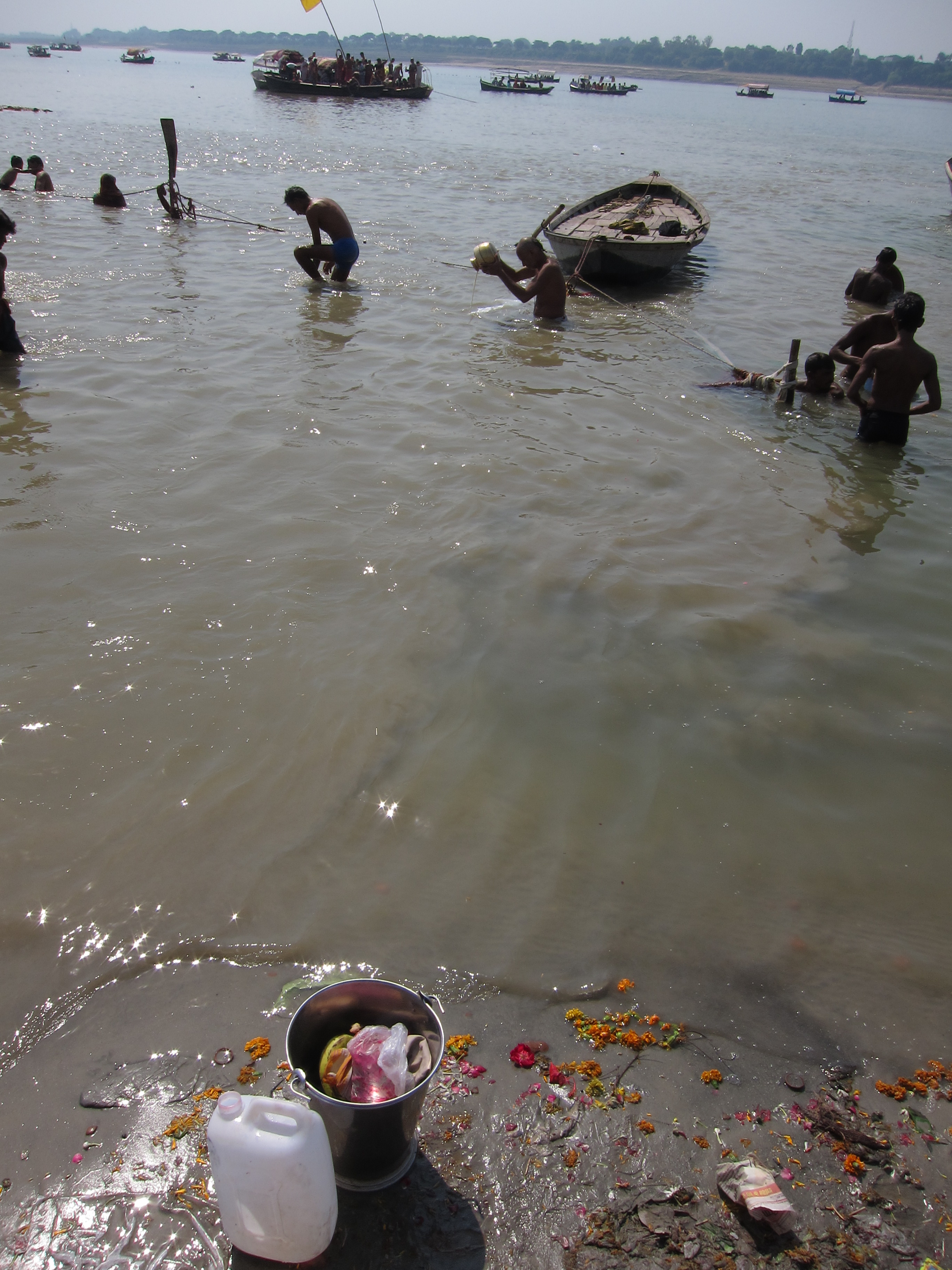
Three sacred rivers meet at Allahabad: The Ganges, born of clear Himalayan tributaries that first trickle and then rage down from India’s border with Tibet; its sister, the Yamuna, which shadows the Ganges to the west before curving past Delhi and the Taj Mahal to join her; and the mythical Saraswati, ancient and invisible, which is said to run beneath the earth.
Only the Saraswati reaches Allahabad in a pristine state.
It’s strange when someone you’ve seen up close, even for just a few hours, gets killed. Even when they were terrible and had it coming. You see that grey-skinned person bleeding, sagging, disoriented, afraid in the mob, and later you see him dead and stripped.
In the back of your mind you always knew this is where those great Amazon discounts came from: Desperate workers, including pregnant women, passing out in stifling 110-degree warehouses, some of them required to sort or pack a different item every 30 seconds over a 10-hour shift.
Forget Agatha Christie’s Hercule Poirot unraveling the deadly mendacities of a steamer full of wealthy foreign tourists. Divorce your gaze from the spray-tanned Elizabeth Taylor and her cast of genuflecting thousands. For a cinematic glimpse of what life was like along the Nile in the glorious old and not-so-old days, check out these overlooked classics of exploration, identity, betrayal, and fear on the world’s longest river. (A video slideshow at the Huffington Post.)
It was mid-February, 2006, and western Darfur was hot as fire. The colonel was an American. He’d been seconded to the region’s doomed African Union peacekeeping mission, one of dozens of Western military personnel – Canadians, Germans, French airmen in smart blue jumpsuits, even a lone Cuban (compared with Sudan, Cuba is definitely the West) – serving as advisors to the underpaid and underequipped African Union force.
I can’t recall where the colonel was from. He and his family were based in Italy and they hated it. “It’s the language,” he said. “And it’s the food. My kids don’t like the food. Neither does my wife. Or me, for that matter. It’s a lot of McDonald’s, that’s how we’re getting by.”
A fake Dior bag, even one you know is fake, can still provide a little pleasure. Why? It looks nice. And it holds within it the comfort of the familiar and the aspired-to.
This first occurred to me last year, thousands of miles from Dior’s Paris and New York’s Chinatown, when I laid eyes on Bangladesh’s fake Taj Mahal.
The fake Taj is a tribute to a tribute. A souvenir snow globe for a country that has never seen snow.Continue reading »
The northern wing of the Sudan People’s Liberation Movement has issued a strong statement committing itself to the Garangist vision of a reformed Sudan, with “No Compromise, No Retreat” in Southern Kordofan. Today’s statement comes after a two-day meeting attended by Blue Nile state governor Malik Agar, Southern Kordofan commander Abdelazis El Hilu, and SPLM Secretary General Yasir Arman.
The SPLM says that any peace negotiations must take place outside Sudan, under the auspices of a third-party mediator. President Omar al Bashir’s position is the opposite: Negotiations will take place only in Sudan, he says. The SPLMN’s full statement is below.
I’ve received a copy of the United Nations Mission in Sudan’s June human rights report on fighting in Southern Kordofan. It’s received coverage recently by the New York Times, the Guardian, and the Associated Press, among others. Still, it’s worth reading all 19 pages.
The document, which I am posting below, is detailed and grim. It confirms earlier reports of the existence of mass graves, a racial murder spree by Khartoum’s army, and the targeting of civilians by the Sudanese Armed Forces and its related militias and police.